Kenya’s Gulf Energy has reaffirmed plans to invest nearly $6 billion (Sh774 billion) in the long-delayed South Lokichar oil development, pledging to adhere to international best practice as it pushes for first oil by December 1, 2026.
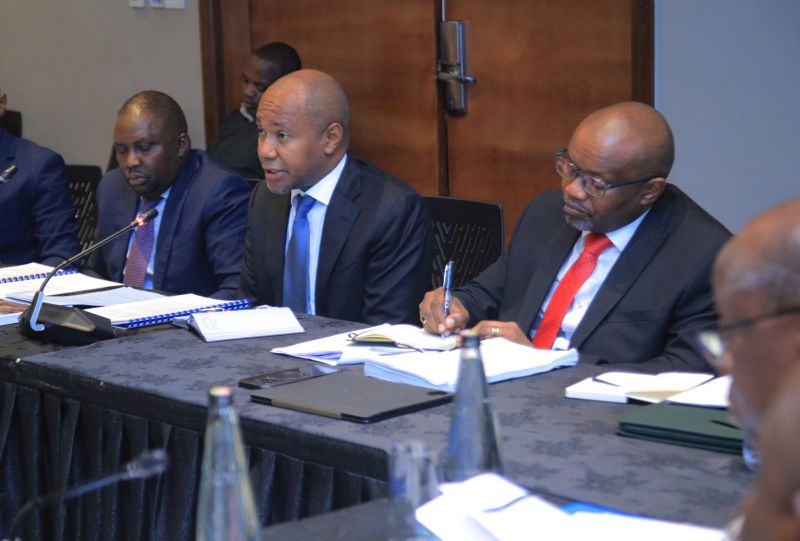
Appearing before a joint sitting of Parliament’s energy committees, Gulf Energy E&P BV chairman Francis Njogu described the project as the most significant private sector-led upstream petroleum investment in Kenya’s history, and urged lawmakers to fast-track approval of the Field Development Plan (FDP)
The session was co-chaired by National Assembly Energy Committee chair David Gikaria and Senate Energy Committee vice chair William Kisang, as legislators conduct public participation ahead of ratification of the FDP and associated Production Sharing Contracts (PSCs).
Mr Njogu said the company is ready to move to a Final Investment Decision (FID), but requires timely parliamentary approval to secure financing in an increasingly constrained global energy market.
“Frontier oil projects such as South Lokichar must demonstrate strong economics, fiscal stability and timely decision-making to remain competitive for capital,” he told MPs and senators, warning that prolonged uncertainty could see Kenya lose out to rival jurisdictions taht ar actively adjusting terms to attract shrinking upstream investment.
The South Lokichar project, located in Turkana County, is Kenya’s largest onshore petroleum development prospect. Under the PSC framework, the State retains ownership of the resource while the contractor provides technical expertise and assumes exploration and development risk.
Mr Njogu said the FDP and PSCs place strong emphasis on local content, community engagement and shared economic benefits, anchored in what he termed a ring-fenced local content strategy. The firm, he added, intends to prioritize jobs and procurement opportunities for the Turkana host community and Kenyan businesses more broadly.
Mr Njogu said Gulf Energy is financially positioned to undertake the capital-intensive project, citing partnerships and credit lines with local and international financial institutions.
The Government projects potential earnings of between $1.05 billion (Sh136 billion) at $60 per barrel and $2.9 billion (Sh371 billion) at $70 per barrel over the life of the project.
Mr Njogu defended project-specific cost recovery measures included in the FDP, which was approved last November by Energy Cabinet Secretary Opiyo Wandayi, arguing they are necessary to meet bankability thresholds required by lenders before committing capital.
He said the development is a time-sensitive opportunity for Kenya to convert a known petroleum resource into long-term economic value, even as global lenders tighten criteria for hydrocarbon financing in line with climate commitments and shift capital towards lower-carbon energy systems.
Parliament is expected to debate the FDP and PSCs in the coming weeks before deciding whether to ratify the agreements.