Kenya’s manufacturers spent July 2026 pushing back against higher taxes, rising input costs and import competition, while seeking new markets and greater government support for local production.
Across industries, manufacturers lobbied for changes to taxes and regulations, gathered data to support their case to policymakers and explored opportunities to expand local value addition.
Timber manufacturers raised concerns over competition from substandard imports from the East African Community and the impact of excise duty on imported timber boards introduced under the Finance Act 2026.
The industry acknowledged that the duty could help address import competition but warned that it could also raise production costs and affect the availability of raw materials.
Manufacturers sought a meeting with the Ministry of Investments, Trade and Industry to assess the impact of the tax and explore measures to strengthen local producers.
Paper and packaging manufacturers also challenged the tax burden on their industry. They told the government that excise duty on kraft liner had weakened their competitiveness in both the domestic and export markets, while also raising concerns over excise duty and export levies on kraft paper and taxes on imported printing inks and resins.
The State Department for Industry, working with KAM, began a verification exercise in July that is running through August 14. The exercise is expected to provide evidence for policy recommendations aimed at addressing challenges facing the sector and supporting local manufacturing.
Food and beverage manufacturers faced higher costs following a sharp increase in excise duty on imported industrial sugar.
The Finance Act 2026 raised the duty from Sh7.50 to Sh40 per kilogram, prompting industrial sugar users to warn that the increase was raising production costs, straining cash flows and reducing export competitiveness.
The industry sought further discussions with the National Treasury over the measure.
Edible-oil manufacturers raised concerns over the 2 per cent levy on imported palm oil and its derivatives, saying it was increasing production costs, reducing competitiveness and constraining exports.
Salt manufacturers spent July dealing with uncertainty around the mining regulatory framework. The subsector reviewed a Mining Task Force Report but decided to withhold its submission until it had engaged the Principal Secretary for Mining in August to clarify the report’s implications for the industry.
Salt-sector stakeholders also worked with the Gongoni Beach Management Unit on access and security challenges, agreeing to identify designated access routes and strengthen communication around production areas.
Steel manufacturers took their concerns to the regional level, with more than 400 industry players gathering at the East African Steel Summit in July to discuss trade, investment, local value addition and industrial development.
The sector also reviewed the impact of the Finance Act 2026 and new EAC tariff measures on manufacturing costs and competitiveness as producers looked for ways to strengthen regional trade and investment.
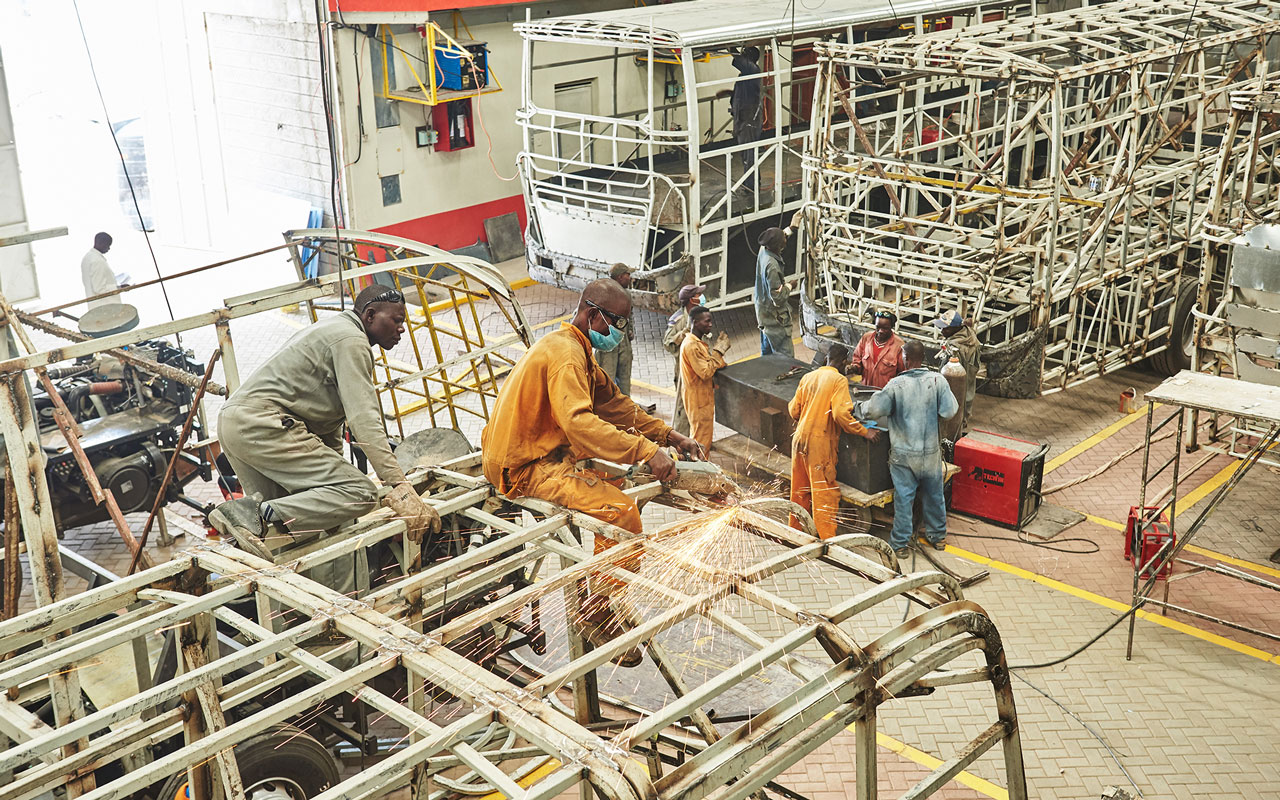
Automotive manufacturers focused on the cost and availability of steel, local content and regulatory challenges. Bus bodybuilders reported that limited steel availability and high prices were increasing the cost of locally manufactured buses.
The wider automotive industry also pushed for progress on the Automotive Bill, local-content initiatives and operational challenges at the National Transport and Safety Authority, while exploring opportunities in the wider East African market.
Textile and apparel manufacturers focused on protecting access to the US market as they engaged the US Embassy over the future of the African Growth and Opportunity Act(AGOA).
The industry sought support for an extension of AGOA to preserve market access and maintain the competitiveness of Kenyan exports.
Manufacturers were also encouraged to use the Duty Remission Scheme, which took effect in July, while a two-day masterclass brought together industry and government participants to examine the textile value chain from cotton production through yarn, fabric and garment manufacturing.
Leather manufacturers focused on improving their access to raw materials and expanding into new markets. Tanneries agreed to submit production-capacity data through KAM to strengthen the industry’s case for policy support.
Leather and textile companies also participated in an AfCFTA business clinic that focused on market-access opportunities and ways to expand regional exports.
Plastic manufacturers pushed for changes to product standards, arguing that some requirements for plastic buckets did not reflect consumer use or current manufacturing practices.
Manufacturers specifically questioned requirements covering drop tests, brimful capacity and temperature testing, while calling for the standards to reflect the industry’s shift from high-density polyethylene to polypropylene.
The industry also called for stronger local testing capacity and greater chemical disclosure as regulators assessed chemicals of concern, including phthalates and Bisphenol A, in plastic products.
Lubricant manufacturers pressed the Kenya Bureau of Standards(KEBS) over delays in inspections and standards compliance.
They cited delays in base-oil inspections, expired Certificates of Conformity, disputed test results, digital-service inefficiencies and illicit trade as challenges affecting the industry’s competitiveness.
KEBS agreed to review the manufacturers’ recommendations, while industry players agreed to provide information on suspected illicit and substandard products to support enforcement.
Power cable manufacturers sought a larger role in energy infrastructure projects by pushing for greater local sourcing.
The State Department for Energy and power sector agencies including Kenya Power, KenGen, KETRACO, REREC and the Nuclear Power and Energy Agency committed to support local sourcing of cables and conductors.
Cement manufacturers spent July working with government and the United Nations Industrial Development Organization on a roadmap to cut emissions from cement production and the wider industrial sector.
Industry stakeholders submitted comments for consideration before the roadmap is finalised, with the final draft scheduled for validation in October.
Pharmaceutical manufacturers focused on expanding local production of health products and technologies, as the industry participated in a regional programme on strengthening manufacturing capacity in Eastern and Southern Africa.
The sector also followed up on outstanding payments from the Kenya Medical Supplies Authority(KEMSA), VAT refunds, export compliance, standards levies and regulatory requirements as it sought to improve the operating environment for local producers.